The Challenge
A family in Northglenn reached out after inheriting a property that hadn't been cleared in years. Side yards, the alley between the house and fence, the back lot, and the on-site workshop were all packed — old fencing, scrap steel, rotted lumber, household items, yard debris, and decades of accumulation.
On top of the scale, two real constraints shaped the job:
- Tight budget. The family was navigating an estate, not a renovation. A standard hourly junk-removal quote wasn't going to work for them.
- Tight access. The side yards and alley were too narrow to back a truck or trailer into. Most of the 25 tons had to be hand-carried out to a staging point.
We took the call because this is exactly the kind of job that breaks people when they try to DIY it — and exactly the kind of job our small-crew, scrap-aware model is built for.
What We Did, Zone by Zone
The 5 before/after pairs below walk through the property in roughly the order we worked it.
Zone 1 — North Side Yard (Fence-Line)
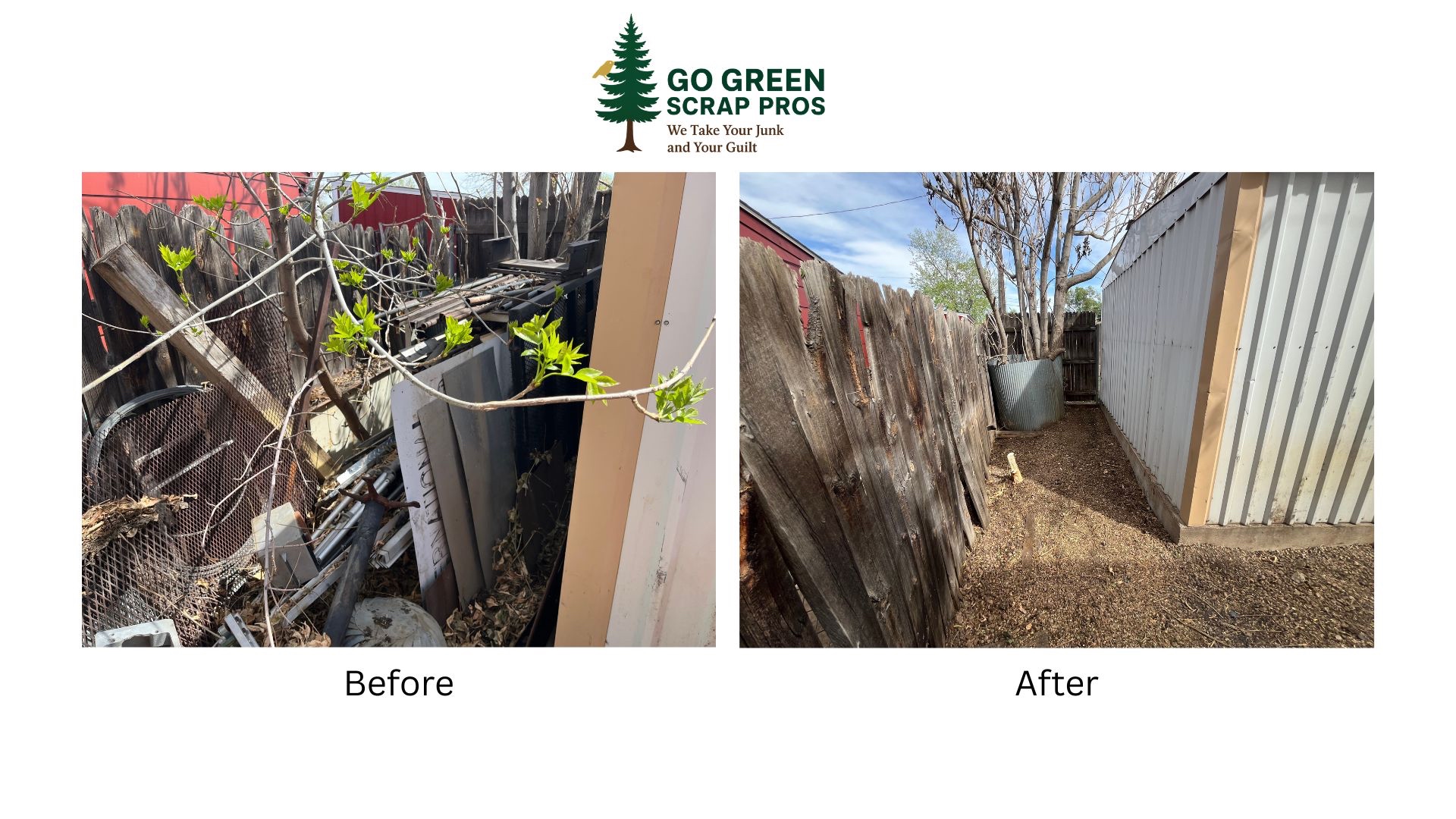
Rotted siding, old metal mesh, scrap pipe, and years of yard debris had collapsed into the fence-line and blocked the side of the house. We pulled the metal first (scrap value), then cleared the wood and organic debris down to dirt.
Zone 2 — Narrow Alley Between House and Fence
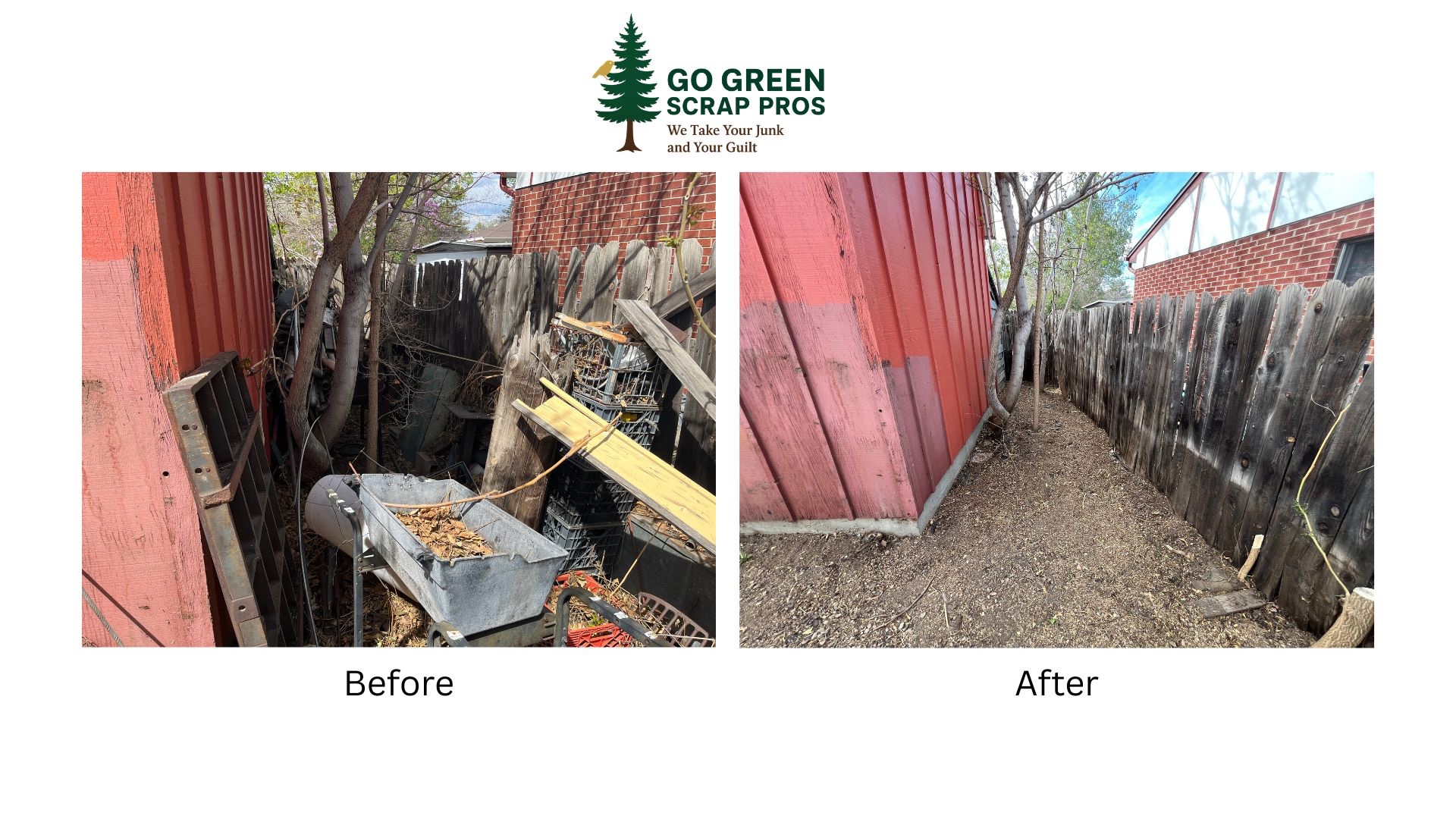
The tightest spot on the property — barely shoulder-width. Old fence boards, a metal trough, milk crates of unidentified hardware, and brush packed solid. Everything came out by hand, in five-gallon buckets and small armloads, then sorted at the staging point.
Zone 3 — Back Lot (South Side)
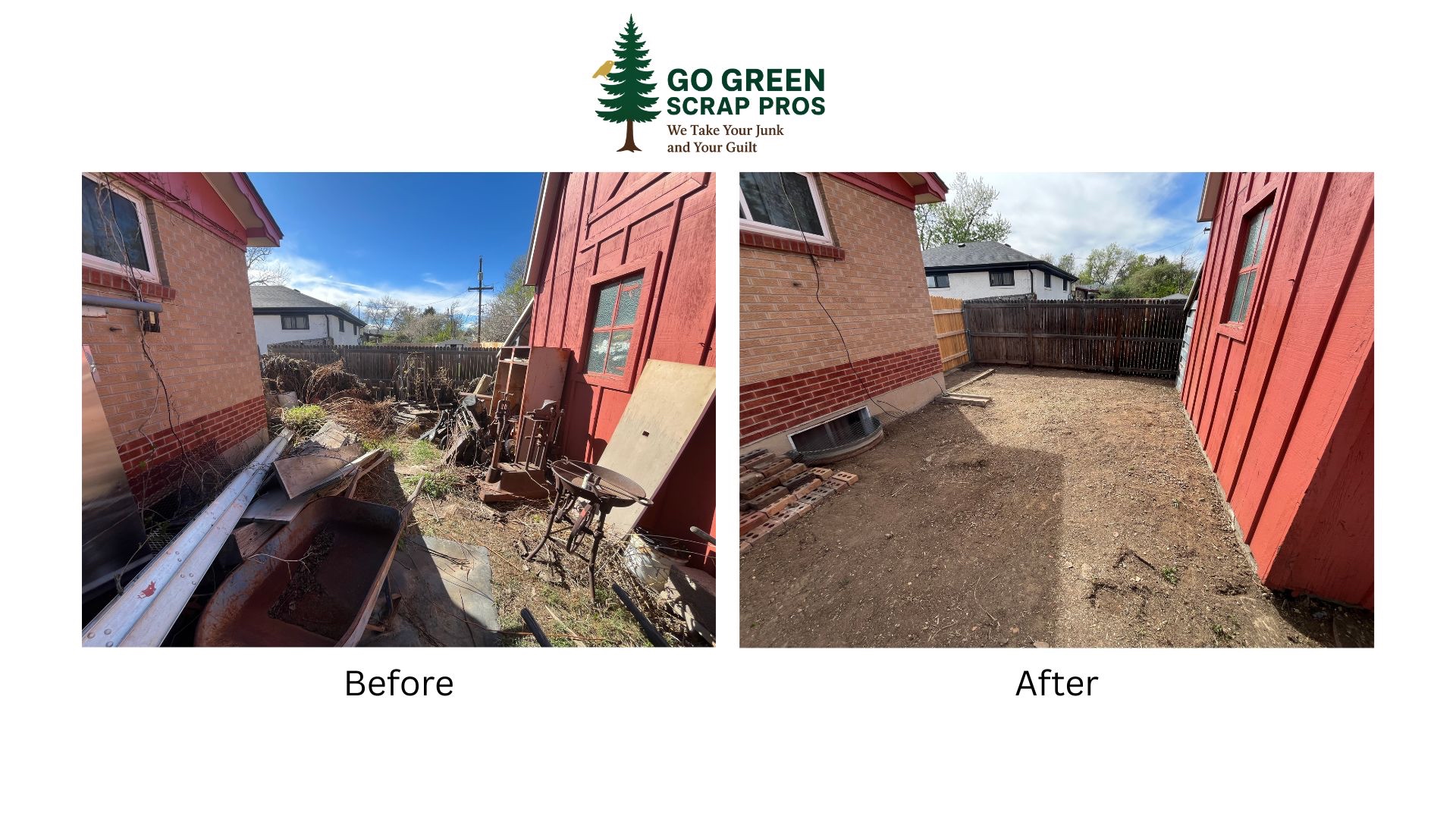
A pile of rusted metal furniture, an antique cast-iron treadle sewing machine base, scrap aluminum, and household debris stacked between the two outbuildings. Heavy items came out first to expose what was underneath.
Zone 4 — Back Lot (Wide Angle)
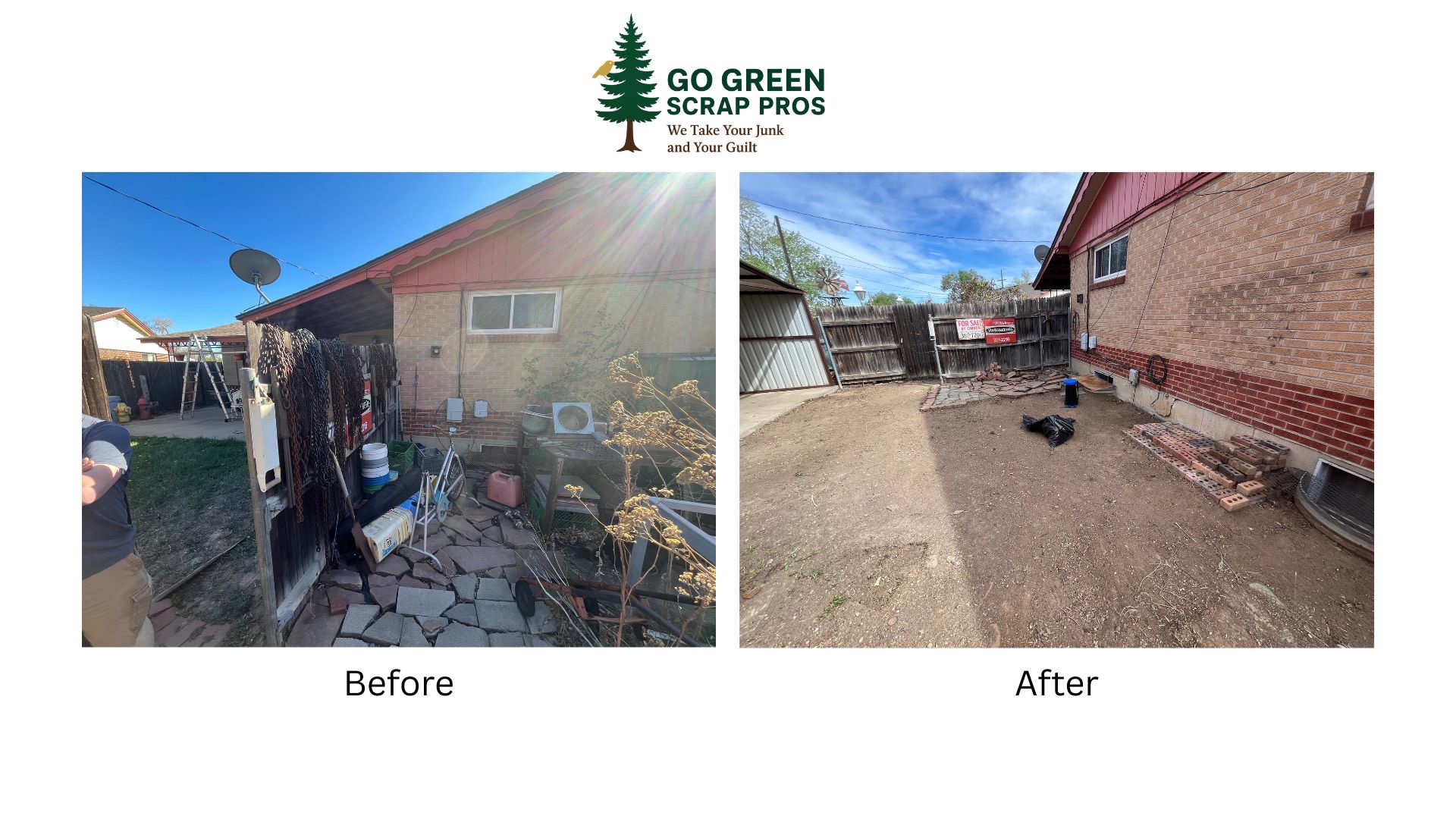
Satellite-dish frames, chain stockpiles, brick pallets, old propane setups, and assorted household items spread along the back of the house. This zone alone produced multiple truckloads.
Zone 5 — On-Site Workshop
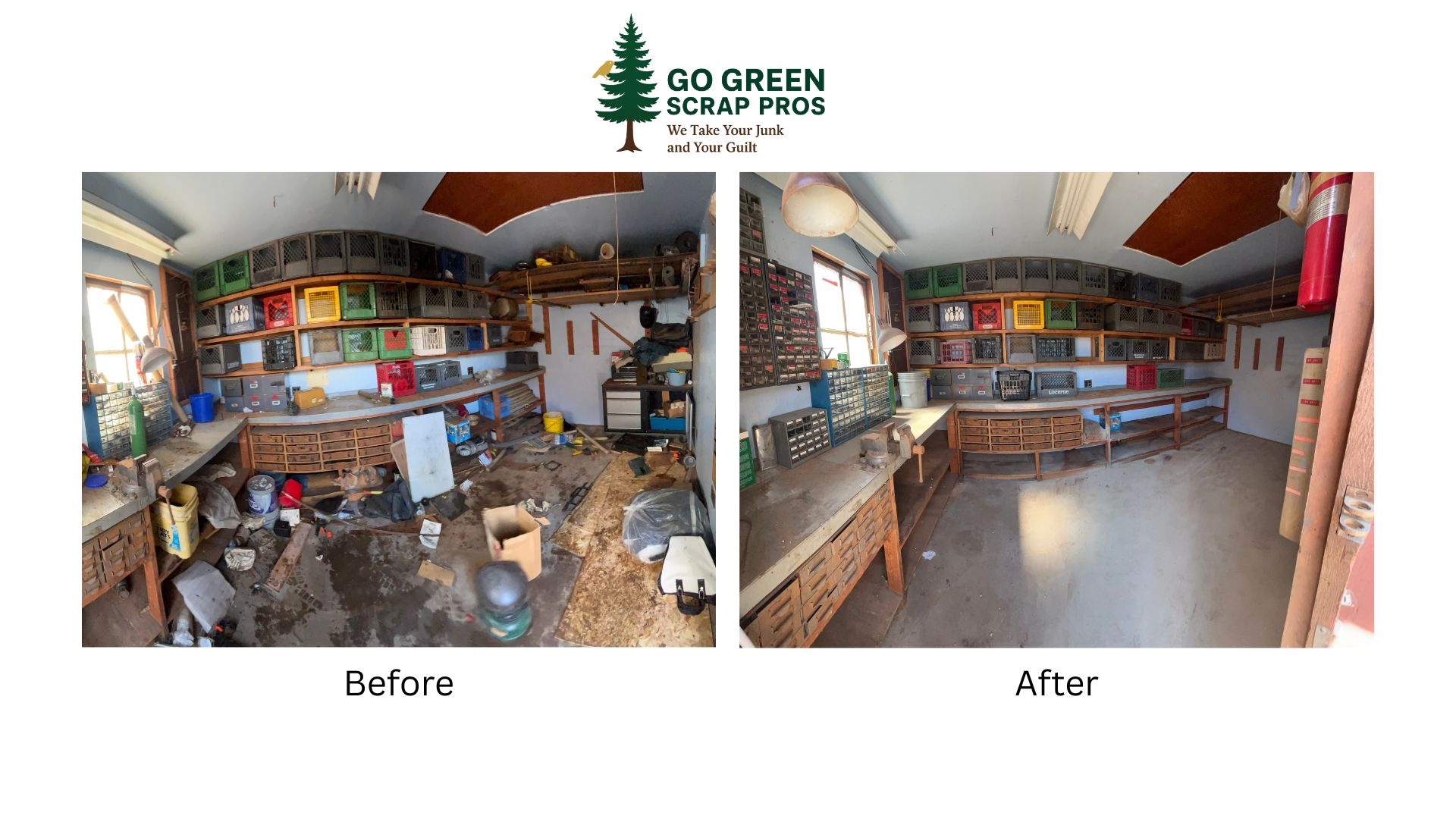
A working shop that hadn't been used in years — debris on the floor, items pulled from the property piled in the middle. We cleared the floor, kept the original built-in storage and crate-organized parts wall intact (the after photo shows the shop usable again), and pulled out only what was actual junk.
Hazards We Hit (and How We Handled Them)
A property this old and this neglected hides things. What we ran into:
- Sharp metal, exposed nails, broken glass throughout — standard PPE, slow pace, no injuries.
- Rotted, unstable piles — anything tall got pulled down deliberately from a safe angle before we sorted what fell.
- Pests — wildlife was present in several stacks. We backed off, let them clear, then worked the area.
- Hazardous materials — partway through the job we found a collection of old oils, solvents, and other flammable materials.
That last one is the part we want to be clear about: we are not licensed to transport hazardous materials. We didn't pretend we were, and we didn't just leave it for the family to figure out. We stopped, researched, and gave them three vetted disposal options for the hazmat — including which one we'd recommend, why, and roughly what it would cost. Then we kept working on what we could legally handle.
Knowing your limits isn't a weakness. Pretending you don't have any is what gets families fined or hurt.
Where It All Went
The headline number: roughly 25 tons of steel diverted from the landfill through metal recycling. Beyond that:
- Steel and other metals — scrap yards. Sorted by type (ferrous, non-ferrous, aluminum) for best diversion and best value.
- Reusable wood — salvaged and set aside where it was sound enough to be used again.
- Yard debris — composting and green-waste streams where possible.
- General trash — four 40-yard roll-off dumpsters, transfer station.
- Hazardous materials — handed off to the family with three properly-licensed disposal options.
The "We Take Your Junk and Your Guilt" tagline isn't decoration. On this job, the majority of the material weight went back into the recycling stream instead of the landfill.
What It Cost (And Why This Approach Worked)
We billed the family $600/day for labor, plus expenses (dumpster rentals, fuel, dump fees). We retained the scrap metal as part of our compensation.
Here's why that mattered: a standard "by the truckload" quote on a job this size could have run well into five figures and been a non-starter for the family. By structuring it as labor + expenses, with the metal as our upside, we made the job affordable for them and still made the project worthwhile for us. The metal market did the heavy lifting on our margin.
- There's substantial recoverable scrap on site (metal, copper, aluminum, working appliances, etc.)
- The family is working with a tight budget
- The client is comfortable with full transparency about what's being kept vs. hauled to landfill
It doesn't work for every job. But for estate cleanouts on older properties, it's worth a conversation.
Equipment & Logistics (The Honest Version)
We didn't get this right on day one. Here's what actually happened:
Days 1–3: We started with a rented box truck. Made sense on paper — flexible, no scheduling constraints, no per-pull fees. In practice, we spent way too much time loading the truck, driving it to the transfer station, unloading, and driving back. With 160 cubic yards of debris and tight access requiring hand-carry to the truck, the round trips were killing the day.
Day 4 onward: We pivoted to roll-off dumpsters on site. Four 40-yard pulls over the rest of the week. Crew stayed productive sorting and loading instead of driving. The math flipped immediately — total cost was lower, total time was shorter, and the crew was less worn out.
If you're reading this and quoting a similar job — match the equipment to the scale on day one. We didn't, and we paid for it in days 1–3.
Lessons Learned
Three takeaways we're carrying into every future estate cleanout:
- Match equipment to scale on day one. If we suspect more than ~30 cubic yards of debris, dumpsters go on site before the first shovel hits the ground. Box trucks are for selective hauls, not full property reclamation.
- Flexible pricing changes who we can help. A labor-plus-expenses-plus-scrap model lets us work jobs that hourly pricing would have priced out of reach. For estate clients on tight budgets, that's the difference between getting the property cleared and watching it sit for another year.
- Identify hazmat on day one — don't discover it on day five. Going forward, our property walk-through specifically includes a hazmat check. If we find anything we can't legally haul, we tell the client immediately, give them disposal options in writing, and adjust the plan around it. Surprises mid-week cost time.
Got an Estate Cleanout You Need Handled?
Whether you're an executor, an adult child handling a parent's property, a realtor prepping a listing, or a family member who just inherited a property full of decades of stuff — we can walk it with you, give you a clear quote, and tell you honestly what's recyclable, what's donatable, and what has to go to the transfer station.
Free quote — text us photos of the property and we'll come back with a number.
Call or Text 720-675-7693